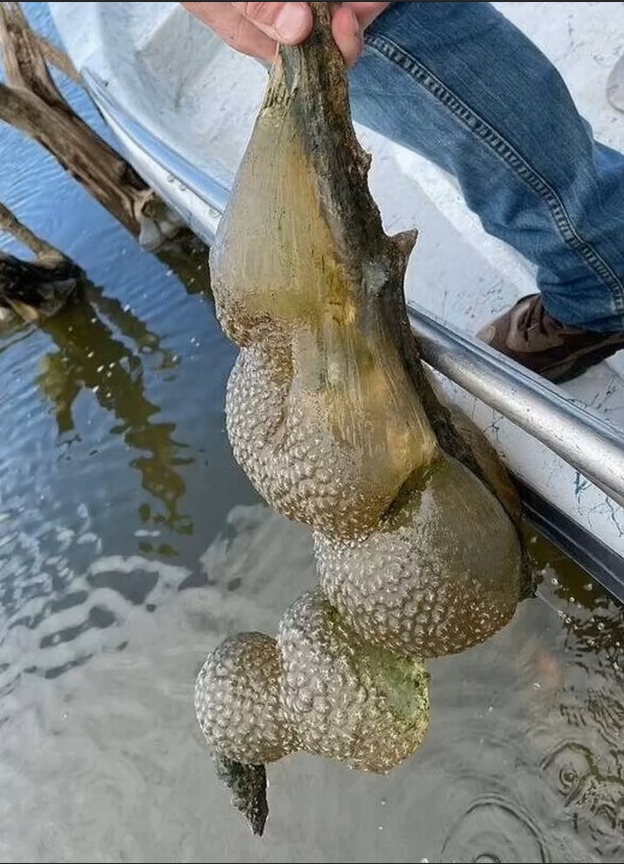
In March 2024, people boating on the quiet waters of McGee Creek Reservoir in Oklahoma spotted something unusual hanging from branches under the surface. Odd, jelly-like masses were attached to the submerged wood, leaving visitors puzzled and a little uneasy.
At first glance, the strange blobs looked almost alien. Their soft, transparent texture made some people think they could be eggs, an invasive species, or even some unknown creature living in the lake. Photos of the discovery quickly spread online, and many wondered what exactly they were looking at.
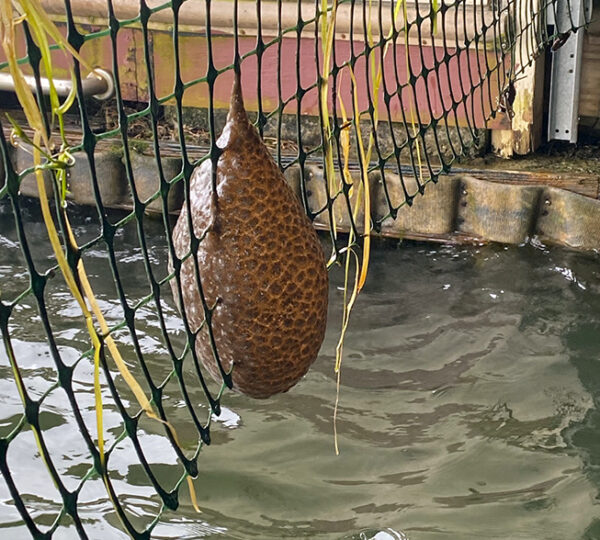
Scientists soon stepped in with an explanation. The mysterious shapes were actually bryozoans, harmless freshwater organisms that are commonly found in lakes and rivers across North America.
Bryozoans are tiny invertebrates that live together in large colonies made up of hundreds or even thousands of microscopic animals called zooids. Even though the colony looks like one big jelly mass, it’s actually many small creatures living and working together.
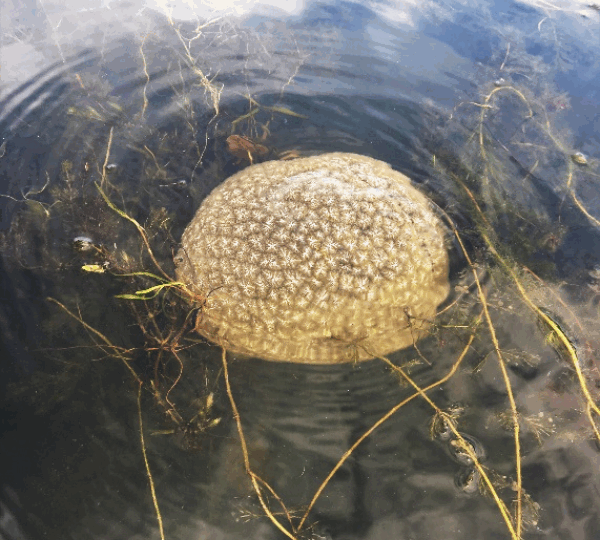
Each zooid feeds by filtering tiny particles from the water, such as algae, bacteria, and organic debris. Because of this, bryozoans help keep the water clean by naturally acting as filters for the lake.
The soft, jelly-like coating around the colony protects the organisms and gives them their unusual appearance. These colonies can grow into different shapes and sometimes become as large as a grapefruit — or even the size of a basketball.
Even though they may look strange, bryozoans are completely harmless to people. They don’t sting, bite, or release toxins. In fact, their presence is often a sign that the water is healthy and the ecosystem is in good condition.
These organisms are also incredibly ancient. Fossils show that their ancestors lived more than 470 million years ago, making them one of the oldest groups of colonial animals still alive today.
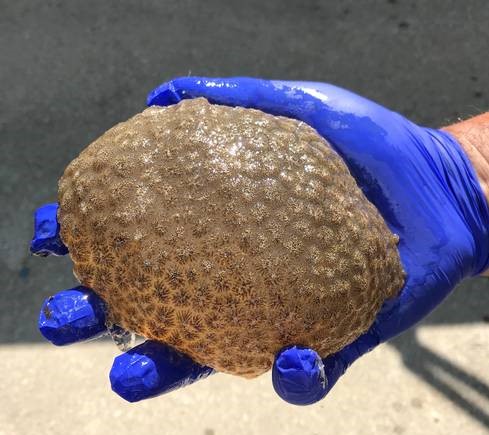
What first looked like something mysterious in the Oklahoma lake turned out to be a natural and helpful part of the environment, quietly cleaning the water and supporting life beneath the surface.
Sometimes the strangest things we find in nature aren’t dangerous at all — they’re just reminders of how much hidden life exists all around us.