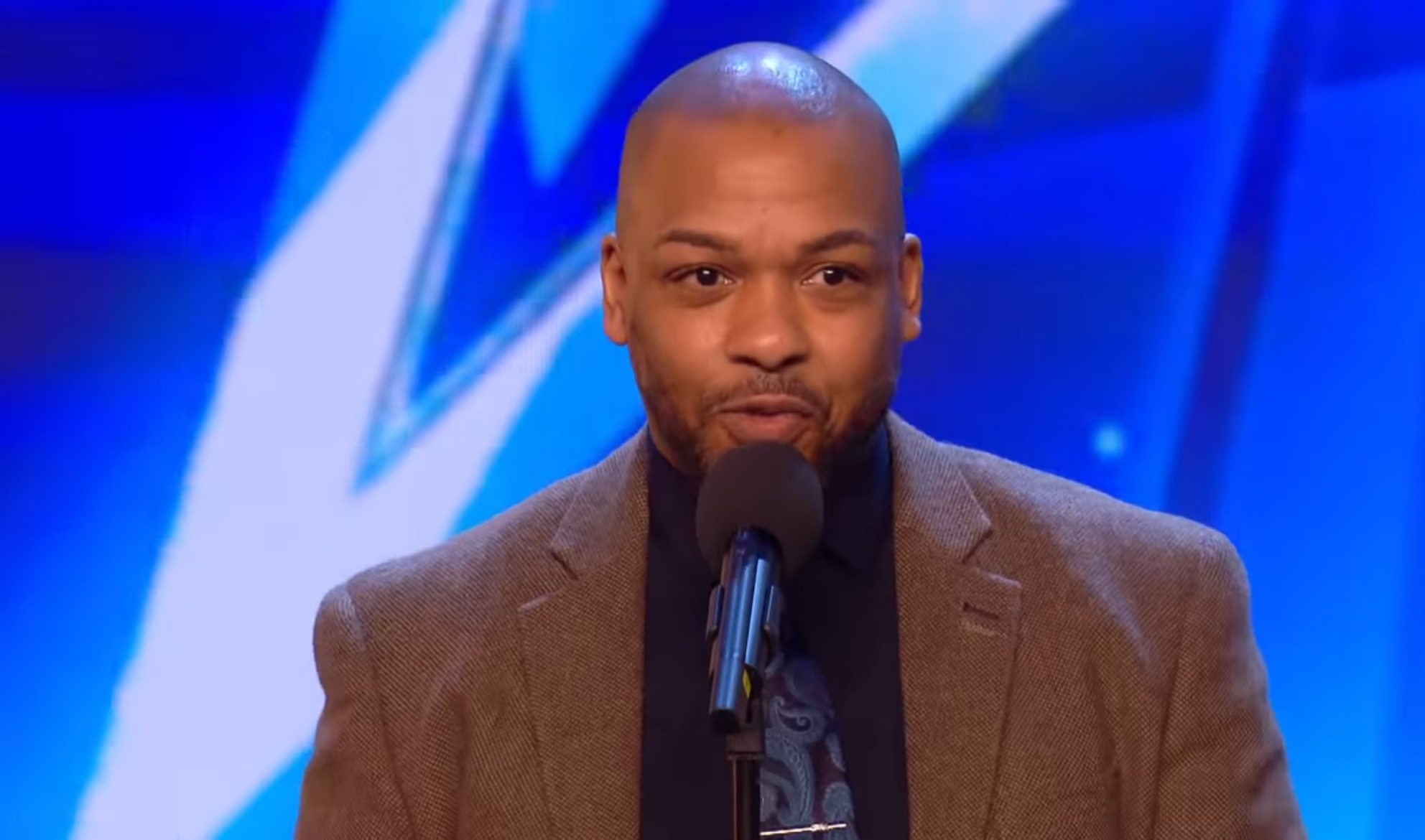
Lifford Shillingford, a singer from South London, stepped onto the Britain’s Got Talent stage not just seeking fame, but seeking redemption. Speaking candidly about his prior achievements, he disclosed that he was a member of the well-known musical group Artful Dodger, which rose to prominence in the late 1990s and featured on significant television programs. However, Lifford acknowledged that his brilliant career was cruelly cut short when he suffered from severe depression and anxiety, which caused his dreams, well-being, and profession to all collapse. He called his wife his “rock,” and she was there to back his huge, positive stride forward. His decision to return to the stage after years of silence was an act of great bravery.
Lifford selected the profoundly poignant Sam Cooke classic “A Change Is Gonna Come” for his performance. His performance was incredibly moving and impactful because the song’s lyrics precisely reflected his own life’s path. The weight of his previous hardships and the optimism for a better future were conveyed by his deep, passionate voice, which filled the theater. The judges and audience were enthralled with his passionate and unadulterated singing, realizing that it was more than simply an audition and a proclamation of his return to the life he believed he was destined to lead.
His performance had an instant and profound effect. His tale and his selflessness in returning to the stage following such a traumatic setback touched the judges. His fortitude particularly impressed Alesha Dixon, who noted that it takes tremendous bravery when the industry has knocked you down. Lifford advanced directly to the live semifinals as she boldly slammed her hand down on the Golden Buzzer. It was a meaningful and appropriate event that confirmed that Lifford’s transformation had finally come about after a “long, long time coming.”