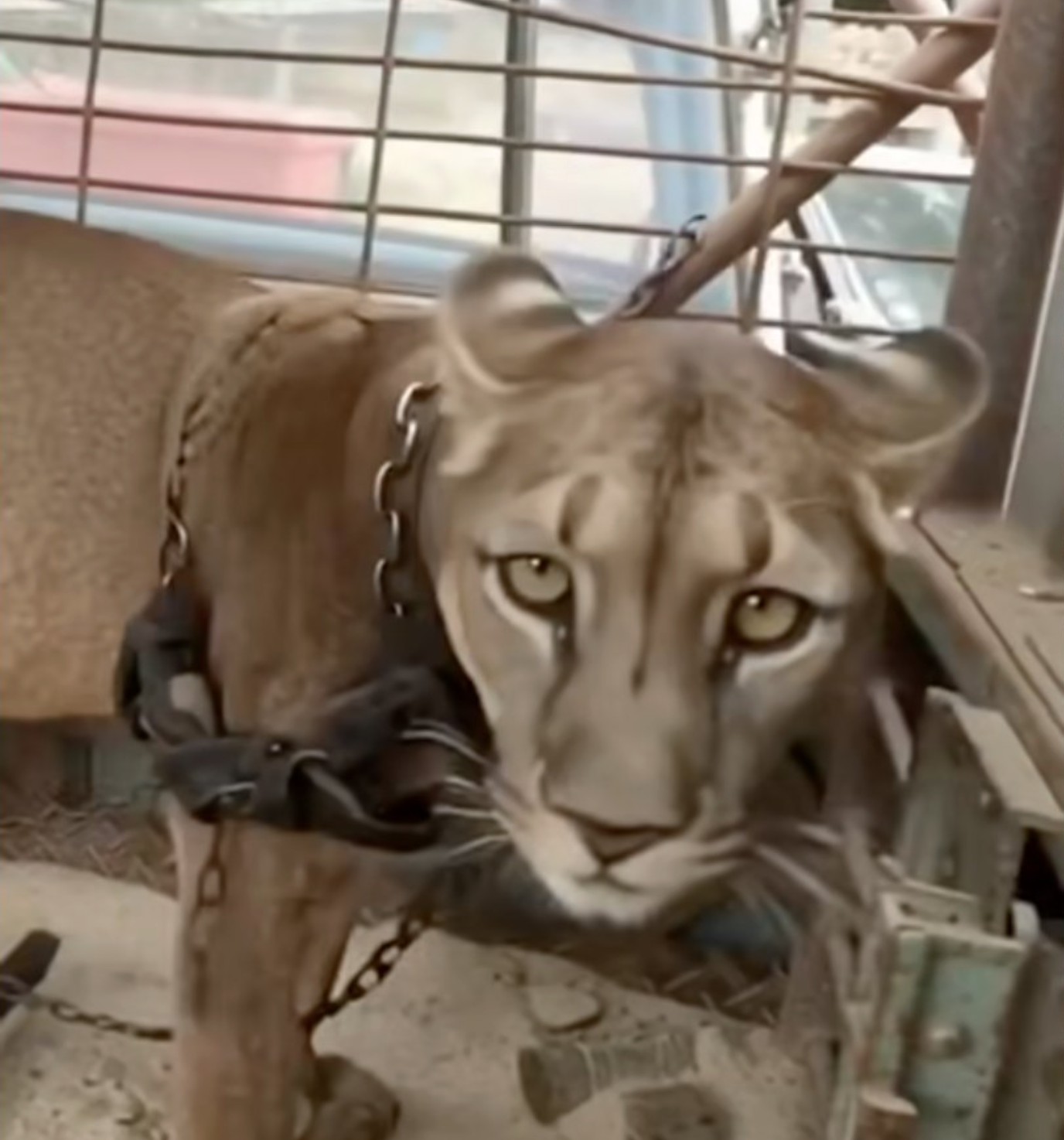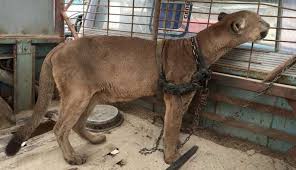
His name may have been inspired by the brave lion from The Lion King, but his real life was far from heroic. Instead of running free, he spent most of his days tied beside circus equipment, with barely enough room to move.
Rescuers believe he was taken from the wild when he was still a cub and sold through illegal wildlife traffickers before ending up in the hands of a traveling circus that moved through small towns across Peru.
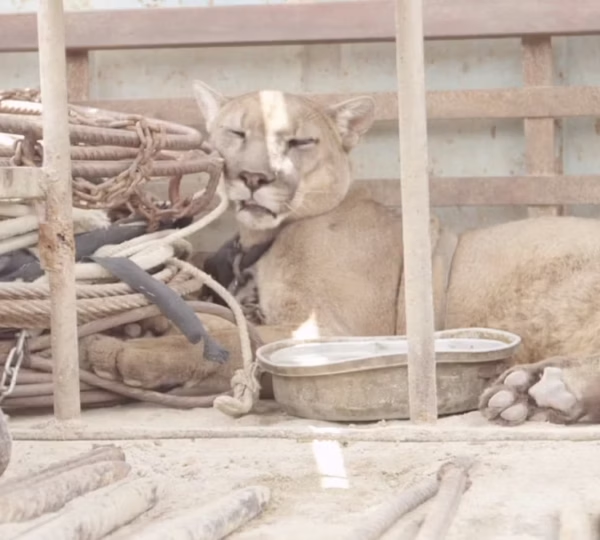
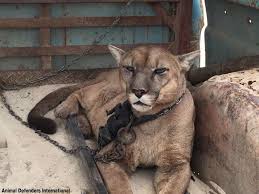
For years, Mufasa never knew what it felt like to live in nature. There were no forests, no open land, no quiet places—only the noise of the road and the heavy chains that kept him tied to the truck.
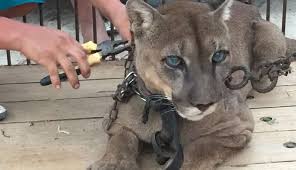
His rescue finally came after Peru banned the use of wild animals in circus performances in 2011. Following the law, the organization Animal Defenders International (ADI) launched a large rescue mission called Spirit of Freedom, aimed at shutting down illegal circuses across the country.
During the operation, teams saved dozens of animals, including lions, bears, monkeys, and other exotic species kept in terrible conditions.
Finding Mufasa was not easy. When rescuers located the circus, the owners refused to give him up, leading to a long standoff that lasted several hours before authorities were finally able to free him.
When the chains were cut, Mufasa stretched his body slowly, as if he was feeling freedom for the first time in his life. Photos of that moment spread around the world, touching the hearts of millions.
Veterinarians later discovered he was weak, underweight, and deeply stressed after years of captivity. He was afraid of people and unfamiliar surroundings, showing signs of both physical and emotional trauma.
He was first taken to a rescue center near Lima, where specialists carefully helped him recover. With proper food, medical care, and patience, his condition slowly improved.
Later, Mufasa was moved to the Taricaya Ecological Reserve, a protected area created for rescued wildlife. Although he could never return fully to the wild after so many years in captivity, he was finally given a large natural space where he could walk freely and live in peace.
Witnesses said the moment he stepped onto grass and under trees for the first time was unforgettable. He moved slowly, exploring his surroundings, as if discovering a world he had been denied for twenty years.
Mufasa’s story became a reminder of how cruel captivity can be—but also of how much can change when people choose to help.
He may have lost most of his life to chains, but in the end, he spent his final years the way every wild animal should—free, beneath the open sky.